
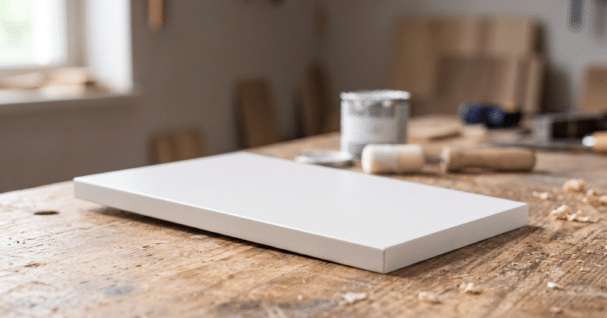
Yes, you can paint MDF, and it can look just as good as painted solid wood when you do it right. MDF has no grain, so it absorbs paint and primer differently than wood, especially at the edges. That single fact explains almost every painting problem people run into.
Skip the prep work and you’ll get fuzzy edges, blotchy absorption, or paint that peels months later. Follow the right process and MDF takes paint better than most wood species, since there’s no grain to fight or telegraph through your finish.
This guide covers sealing edges, choosing the right primer, the full painting process, and fixes for common problems if you’re already mid-project and stuck.
Why MDF Paints Differently Than Wood
MDF’s smooth, uniform surface has no natural grain pattern. That sounds like an advantage, and in some ways it is, but it also means there’s nowhere for small flaws to hide. Wood grain disguises minor brush marks and uneven application. MDF shows everything.
The real issue is at the edges. The face of an MDF board is dense and consistent, but any cut edge exposes the raw fiber core underneath. That core soaks up primer and paint at a much faster rate than the face does. This mismatch in absorption is the single biggest cause of uneven, fuzzy, or blotchy results on MDF projects.
There’s also a moisture factor. MDF fiber expands when it gets saturated with liquid. Water-based primers and paints applied too heavily, especially on those exposed edges, can cause swelling that’s difficult or impossible to reverse. This is why both product choice and how you apply it matter more on MDF than on solid wood.
For broader context on where MDF works best, see our guide on the uses of MDF.
Step-by-Step: How to Paint MDF
Step 1: Sand the Surface
Start with a light sand using 180-220 grit sandpaper to knock down any factory sheen and give primer something to grip. Don’t oversand. The face of MDF is a thin layer of compressed fiber, and aggressive sanding can wear through it.
Wipe the surface down with a tack cloth when you’re done, not a damp rag. Water reintroduces the moisture risk you’re trying to avoid from the start. This step takes ten minutes but gets skipped constantly, and skipping it shows up later as poor primer adhesion.
Step 2: Seal the Edges
This is the step that determines whether your project looks professional or amateur. Cut edges expose raw fiber that absorbs finish unevenly, and an unsealed edge will look rough or fuzzy no matter how careful you are with the paint itself.
Apply a dedicated edge sealer, or a thinned wood filler if that’s what you have on hand, to every cut edge before you touch a primer can. Let it dry completely, then sand smooth with 220 grit. Many experienced finishers apply two light coats of sealer specifically on edges, since a single coat often isn’t enough to fully close off the exposed fiber.
For more detail on protecting MDF edges long-term, see our guide on how to waterproof MDF.
Step 3: Choose and Apply the Right Primer
Edge sealer and primer aren’t the same product, even though they go on around the same stage of the process. Sealer blocks the raw fiber on cut edges from absorbing finish unevenly. Primer creates the surface paint actually bonds to, on edges and faces alike. You need both, and skipping either one shows up in the final finish.
Not all primers behave the same way on MDF. Here’s how the three main types compare.
Oil-based primer offers the best sealing power and blocks absorption more effectively than anything else on this list. It takes longer to dry and has a stronger odor, plus cleanup requires mineral spirits. It’s a strong choice for cabinet doors, furniture, and anything that will see daily handling.
Shellac-based primer dries the fastest of the three and excels at blocking stains and tannin bleed-through. The tradeoff is a strong odor and cleanup that requires denatured alcohol. It works well for quick-turnaround projects or anywhere you’re worried about discoloration showing through the topcoat.
Water-based primer is the easiest to clean up, has the lowest odor, and dries faster than oil. The catch is that you need a formula specifically made for MDF. A generic water-based primer can raise the surface fiber and leave you with a fuzzy texture instead of a smooth one. For most general projects, a quality MDF-rated water-based product gets the job done.
Apply two thin coats rather than one thick one, sanding lightly with 320 grit between them. Pay close attention to the edges you sealed in Step 2. They often need a third coat to match the absorption rate of the face.
Step 4: Sand Between Coats
Once your primer has fully cured, sand lightly with 320-400 grit. This knocks down any fiber that raised slightly during the primer application and smooths out texture you can’t always see but can definitely feel. Wipe with a tack cloth before moving on.
Apply this same logic between paint coats too, not just primer coats. Each light sanding pass is what separates a flat, professional finish from one with visible texture.
Step 5: Apply the Topcoat
Your finish choice affects both durability and appearance. Eggshell or satin works well for furniture and lower-traffic surfaces, and it tends to hide small imperfections better than a glossier finish. Semi-gloss holds up to cleaning and daily wear, making it a common pick for cabinets and trim. High-gloss looks fantastic when the prep work underneath is flawless, but it will show every flaw in your sanding and priming if it isn’t. Flat or matte finishes aren’t a great fit for high-touch surfaces since they show fingerprints and wear quickly.
A fine foam roller or sprayer gives the smoothest results on MDF. Natural bristle brushes tend to leave faint marks on a surface this uniform. As with primer, build up your color in thin coats rather than trying to get full coverage in one pass. Check the product label for full cure time before handling the piece. Many finishes need 24 to 72 hours before they reach full hardness, even if they feel dry to the touch much sooner.
A Note on Ultralite MDF
Ultralite MDF has a lighter, less dense core than standard MDF, and that changes how it behaves under paint.
The lower-density core absorbs primer faster, and the edges are even more porous than standard MDF edges. Edge sealing isn’t optional here. It’s the difference between a clean finish and a visibly uneven one. The lighter weight also makes Ultralite more prone to surface marking during handling and sanding, so use a lighter touch than you would with standard board.
Plan on an extra coat of edge sealer compared to what you’d use on standard MDF. The same primer and paint approach from the steps above still applies, just give the edges and overall coverage a bit more attention. Ultralite is a great option when weight is a concern, like large panels or wall applications, but treat the prep work as even more essential to the final result.
Troubleshooting Common MDF Painting Problems
Fuzzy Edges After Cutting
This happens when raw MDF fiber gets exposed by the saw blade and then has primer or paint applied directly without sealing first. The fix is to sand the edges with 220 grit before any finish goes on, apply edge sealer, let it dry, then sand again with 320 grit. If fuzz shows up after you’ve already primed, that’s a sign the edge wasn’t sealed enough the first time. Add another coat of sealer and resand before moving forward.
Primer Bubbling or Peeling
Bubbling is usually caused by trapped moisture, primer applied too thick, or mixing incompatible products, like putting an oil-based topcoat over water-based primer before it’s fully cured. Sand back to bare MDF in the affected spot, confirm your primer and paint are compatible or that you waited out the proper recoat window, and apply thinner coats with full cure time between each one going forward.
Uneven or Blotchy Finish
A blotchy look almost always traces back to inconsistent absorption, usually from a primer coat that didn’t fully cover the surface or sanding that wasn’t even across the whole piece. Sand the entire surface to a consistent texture, apply a full and even primer coat rather than just touching up the blotchy spots, let it cure completely, then move to your topcoat.
Paint Not Adhering or Peeling Later
If paint is lifting or peeling weeks or months after the job, the likely cause is a skipped primer step or painting directly over a factory finish without sanding it first. If the peeling is widespread, strip back to bare MDF and start over. Paint alone doesn’t bond reliably to MDF, especially over a factory-sealed face.
Swelling Along Edges or Surface
Swelling comes from excess moisture, usually from a water-based product applied too heavily onto edges that weren’t sealed first. Unfortunately, this damage is largely permanent once it happens, which is exactly why every step earlier in this guide matters. Seal the edges before you prime, keep your coats thin, and consider an oil-based or shellac primer if you’re working in a humid space. For more on protecting against moisture long-term, check our guide to waterproofing MDF.
Get the Right MDF for Your Project
MDF can absolutely be painted to a smooth, professional finish. The difference between a result you’re proud of and one that frustrates you almost always comes down to edge sealing and primer choice, not the brand of paint or how skilled you are.
If you remember one thing from this guide, it’s this: seal the edges before anything else.
Forest Plywood stocks both standard MDF and Ultralite MDF for projects of any size. Our team can help you choose the right board for a paint-grade application before your order ships, so you start the project with the right material instead of troubleshooting it later.
Call us at 800.936.7378 or visit our La Mirada or National City locations.
Frequently Asked Questions
Do you need to prime MDF before painting?
Yes, always. Going straight to paint without primer is the single most common reason MDF projects fail months down the road, even if the finish looks fine on day one.
Why does MDF swell when painted?
Mostly from rushing the process. Heavy, wet coats and short dry times between them give moisture more chance to soak into the core before it can evaporate. Thin coats and patience are the real prevention here, more than any specific product.
Can you use latex paint on MDF?
Yes, but only over a proper primer, and not as a substitute for sealing the edges first. Latex paint alone, without primer, won’t bond well and can contribute to the same moisture absorption issues that cause swelling and peeling.
What grit sandpaper is best for MDF before painting?
Use 180-220 grit for the initial surface sand, then move to 320 grit between primer and paint coats. Finer grits between coats smooth out any texture that rises during drying without cutting through the primer layer underneath.
How long should primer dry on MDF before painting?
Check the product label, since dry times vary by primer type, but most need at least a few hours before recoating and up to 24 hours before a topcoat. Oil-based and shellac primers often allow faster recoating than water-based options.
Can you spray paint MDF?
Yes, and a sprayer often gives the smoothest possible finish on MDF since there’s no brush texture left behind. Thin your material slightly if needed, use light passes, and let each coat tack up before adding the next to avoid runs.
Does MDF need to be sealed before painting?
Yes, the edges specifically. Skipping this step is the most common reason a painted MDF piece looks fine on the face but rough or fuzzy along every cut edge, even with a good coat of primer over the top.
How do you fix MDF edges that are already fuzzy after priming?
Sand the fuzzy area back with 220 grit until it’s smooth, apply an edge sealer directly to that spot, let it cure fully, then sand again with 320 grit before reapplying primer. This catches the problem retroactively, but it’s still faster than starting the whole piece over.


