
You’re pricing out cabinet materials and melamine board keeps coming up. It’s affordable, it’s pre-finished, and it shows up in everything from kitchen cabinets to office shelving. But what actually is it, how does it hold up, and when does it make sense over MDF or plywood?
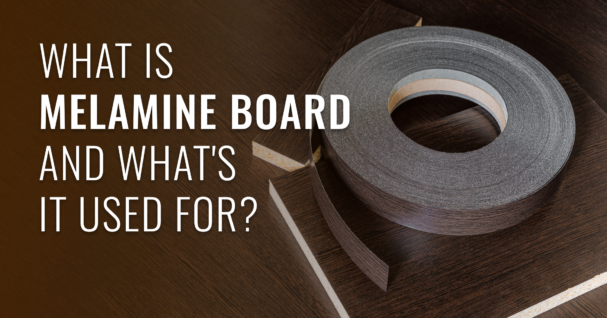
Melamine board is a composite panel made by bonding a melamine resin-coated sheet to a substrate, typically particleboard, MDF, or plywood. The result is a hard, smooth, pre-finished surface that resists scratches, moisture, and stains.
Quick Guide: When Does Melamine Board Make Sense?
Melamine board is a good fit for interior cabinet boxes, shelving, closet systems, office furniture, and commercial display cases. It works especially well on budget-conscious projects where a pre-finished surface saves time and finishing costs.
It’s not the right call for everything, though. If the shelving needs to carry heavy loads over long spans, if the application is structural, or if moisture exposure at the edges is unavoidable, plywood is the better choice. Same goes for projects where you need to heavily customize the finish with paint or stain.
How Is Melamine Board Made?
Melamine is a low-pressure laminate (LPL). A resin-coated decorative sheet gets fused to a substrate core under heat and pressure at 300 to 500 pounds per square inch. That’s what separates it from high-pressure laminate (HPL) like Formica, which is manufactured at over 1,400 PSI and sold as a separate surface sheet you bond to your own substrate.
The practical difference: melamine arrives from the factory as a complete, finished panel. Ready to cut, ready to install. HPL requires a separate application step and costs more. If you’re weighing the two, our melamine vs. laminate guide covers the full comparison.
Melamine panels come in a wide range of colors, wood grain patterns, textures, sizes, and thicknesses.
Melamine Board vs. MDF: What’s the Difference?
MDF is a substrate. It’s one of the core panels that melamine resin gets bonded to. When you buy melamine board, you’re often buying MDF or particleboard with a melamine surface already applied at the factory.
Choosing between raw MDF and pre-finished melamine comes down to flexibility versus convenience. Raw MDF can be painted or finished however you want. Melamine board comes ready to install. No sanding, no painting, no topcoat. For most interior cabinet and shelving work, that’s the easier call.
Melamine Board vs. Plywood: Which Should You Use?
Plywood is stronger, holds fasteners better, and handles heavier loads. For structural applications, load-bearing shelves, and cabinet frames, plywood is the right material.
Melamine wins on surface finish and cost. It’s pre-finished, easy to clean, and less expensive than finished plywood for interior work. For cabinet boxes and shelving in kitchens or bathrooms where appearance matters more than structural strength, it’s a practical and common choice.
What Is Melamine Board Used For?
Melamine board shows up in more places than most people expect.
Kitchen and bathroom cabinets are the most common application. The moisture-resistant surface wipes down easily and holds up in high-humidity spaces, which makes it a natural fit for cabinet boxes and interiors.
Shelving is another go-to use. Closets, pantries, laundry rooms, retail display fixtures. Pre-finished melamine goes up without painting or sealing, which is the whole point.
Office furniture including desks, bookcases, and storage units frequently uses melamine-coated particleboard for its clean look, light weight, and lower cost relative to solid wood.
White melamine has natural dry-erase properties, which is why it has been a standard material for classroom and office whiteboards for decades.
In retail and commercial interiors, display cases, counters, and wall panels often use melamine for its durability and range of finishes. It holds up to daily traffic without requiring much upkeep.
Advantages of Melamine Board
- Durability. The melamine surface is scratch-resistant, moisture-resistant, and stain-resistant. It holds up in kitchens, offices, and storage spaces without showing daily wear.
- Ready to install. No sanding, painting, or finishing required before it goes up. On larger projects that saves real time.
- Variety. Wide range of colors, textures, and wood grain patterns, with enough options to work for utilitarian builds and projects where appearance matters.
- Cost. Runs considerably less than solid wood and is often less expensive than finished plywood. Hard to beat for the value on budget-conscious projects.
Disadvantages of Melamine Board
- Edge exposure. The coating covers face surfaces only. Exposed edges show raw substrate and need edgebanding. It’s a standard step, but it adds time and material to the job.
- Moisture vulnerability at the core. The surface handles moisture well. The substrate underneath does not. Water getting into exposed edges or chips causes the core to swell, which leads to warping or delamination. Proper edgebanding and careful installation are the best protection.
- Chipping. Wrong blade or rough handling during installation and it chips. A fine-tooth blade and proper cut support keep this from being an issue.
- Load limits. Melamine-coated particleboard sags over long unsupported spans under heavy loads. Use a plywood substrate or add a center support to break up the span.
Frequently Asked Questions About Melamine Board
Is melamine board the same as MDF?
No. MDF is a substrate. Melamine board is MDF or particleboard with a melamine surface already bonded to it at the factory.
Can melamine board be used for garage shelving?
It can work for light storage, but garage environments introduce moisture, temperature swings, and heavier loads that push melamine’s limits. For garage shelving that needs to carry real weight or handle humidity, plywood is the more reliable choice.
What’s the difference between melamine and laminate?
Melamine is a type of low-pressure laminate. High-pressure laminate (HPL), like Formica, is manufactured under significantly higher pressure and is more durable and impact-resistant. For a full breakdown, see our guide to melamine vs. laminate.
Can melamine board be painted?
It can, but the smooth surface needs proper prep, light scuffing and a bonding primer for paint to stick. Most people choose melamine specifically to skip that step.
If you’re considering melamine board for a cabinet, shelving, or furniture project, Forest Plywood carries a wide selection of colors, patterns, and substrates. Our team can help you match the right panel to your application.
Call us at 800.936.7378 or visit our La Mirada or National City locations.


