
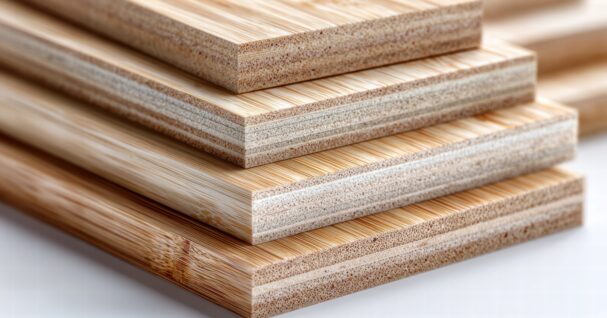
You’re looking at two top-tier plywood options, both way more expensive than standard birch. Both promise superior quality. So which one deserves your money?
Here’s the short answer: Bamboo and Baltic birch each deliver professional results. Bamboo wins for sustainability and moisture resistance. Baltic birch wins for traditional workability and finishing. Your choice depends on your project priorities.
This guide compares strength, cost, workability, and best applications so you can match the right material to your cabinets or furniture project.
Quick Comparison
| Factor | Bamboo Plywood | Baltic Birch |
| Strength | Harder than oak | Very strong, stable |
| Moisture | Excellent resistance | Good with sealing |
| Workability | Harder to cut | Easier with standard tools |
| Finishing | Paint or stain work well | Takes stain beautifully |
| Sustainability | Highly renewable (3-5 years) | Sustainable forestry |
| Cost | Higher (20-40% markup) | Moderate markup |
| Best For | Modern cabinets, humid areas | Traditional furniture, stain-grade |
Choose bamboo if: Sustainability matters most, your project involves moisture, you want a modern look, or you’re painting instead of staining.
Choose Baltic birch if: You want classic wood grain, traditional staining and finishing, easier workability, or a tighter budget (while still quality).
What Is Bamboo Plywood?
Bamboo plywood is made from bamboo grass, not wood. Manufacturers harvest bamboo at just 3-5 years old, process it into thin strips, and laminate those strips under heat and pressure to create dense panels.
What makes it different: Bamboo grows back from its roots without replanting. It’s harder than most hardwoods with a Janka rating around 1,380 (higher than oak at 1,290). It naturally resists moisture without treatment. The grain pattern looks distinctive—you can see bamboo nodes or get smooth laminated surfaces depending on construction.
Why it commands higher prices: Superior strength-to-weight ratio, environmental benefits, moisture resistance built in, and modern aesthetic appeal. Limited availability compared to traditional plywoods also keeps prices elevated.
What Is Baltic Birch Plywood?
Baltic birch is a high-grade birch plywood originating from northern Europe, specifically Finland, Russia, and the Baltic region. Unlike regular birch plywood, it features all-birch construction with no filler veneers and void-free cores.
What makes it different: More plies for the thickness (5/8″ has 9+ plies vs. 5-7 in standard). Faces and backs are equally high quality. The core has no voids or gaps. Even the edges look attractive unfinished, showing clean laminated layers.
Why cabinet makers love it: Predictable quality, works easily with standard tools, holds screws extremely well, stays flat, and takes stain beautifully. It’s been the gold standard for cabinet boxes and furniture for decades.
For broader cabinet material guidance, check our complete guide to choosing plywood for cabinets.
Strength & Durability
Hardness: Bamboo is genuinely harder. Its 1,380 Janka rating beats Baltic birch at 910-1,260. In real terms, bamboo resists dents and scratches better. Baltic birch is still plenty strong for all cabinet and furniture uses.
Stability: Cross-laminated construction in each material prevents the expansion and contraction you get with solid wood. Bamboo has a slight edge in extreme humidity, but Baltic birch stays stable in any normal indoor environment.
Long-term durability: Bamboo naturally resists moisture and insects without treatment. Baltic birch needs proper sealing for wet areas, but lasts decades with basic care. Either material will outlive most cabinet installations when used appropriately.
Cost Reality
Bamboo typically costs 20-40% more than Baltic birch. Each runs significantly higher than standard cabinet plywood. Baltic birch is roughly 2-3 times the cost of standard birch. Bamboo runs 3-4 times standard pricing.
What you’re paying for with bamboo: Sustainability credentials, superior hardness, natural moisture resistance, and modern aesthetic. The markup buys environmental benefits and performance.
Baltic birch delivers: Top-tier construction, void-free cores, professional workability, and proven long-term performance. The investment buys consistency and ease of use.
Value consideration: For high-end custom cabinets, clients expect quality materials. For mid-range cabinets, Baltic birch often delivers everything you need. In moisture-prone bathrooms, bamboo’s extra cost is justified. On large projects, price differences multiply fast.
Workability & Finishing
Cutting and machining: Baltic birch cuts cleanly with standard blades. Bamboo’s hardness requires sharp carbide blades and dulls tools faster. Both rout cleanly with sharp bits, but Baltic birch forgives technique errors better.
Sanding: Baltic birch sands easily to smooth finishes. Bamboo’s harder surface takes more effort. The upside? Bamboo’s hardness means it needs less sanding long-term since it resists scratches.
Edge treatment: Baltic birch edges are beautiful. Those visible plies are often left exposed as a design feature. Bamboo edges are attractive but different looking. Either accepts edge banding perfectly.
Finishing characteristics: Here’s where they really differ. Baltic birch takes stain beautifully with even penetration and shows gorgeous wood grain. Bamboo can be stained, but the grain is less pronounced. Each material paints extremely well. Baltic birch gives you a traditional wood appearance. Bamboo delivers modern, contemporary looks.
Moisture Resistance
Bamboo wins this category clearly. It naturally resists moisture and doesn’t absorb water as readily as wood — no special treatment needed for basic protection. Baltic birch responds to moisture like typical wood and requires sealing for wet areas.
Practical applications: For kitchen cabinets with good sealing, either works. For bathroom vanities, bamboo has a real advantage. In coastal or humid climates, bamboo handles the environment better. In climate-controlled interiors, performance is equal.
Bamboo benefits from sealing but forgives lapses better. Baltic birch requires good sealing practices, especially on edges. Neither is fragile, but bamboo is more forgiving of moisture exposure.
Sustainability
Bamboo’s environmental advantages: Harvested at 3-5 years instead of 20-40 years for trees. Regrows from roots without replanting. Absorbs more CO2 than equivalent trees. Needs minimal pesticides. Smith & Fong, Forest Plywood’s bamboo supplier, uses FSC-certified bamboo.
Baltic birch sustainability: Comes from well-managed European forests with replanting programs. FSC-certified options available. Longer growth cycle, but renewable. Supports traditional sustainable forestry practices.
Honest assessment: Shipping distance is similar (Asia vs. Europe). Each beats tropical hardwoods from endangered forests. Bamboo has the edge on rapid renewability. Baltic birch has decades of proven sustainable management. Your choice depends on which environmental factors matter most to you.
Best Applications
Kitchen Cabinets
Cabinet boxes: Baltic birch is the traditional choice with proven performance. Painted doors: Either works well; bamboo’s harder surface resists damage better. Stained doors: Baltic birch shows traditional grain beautifully. Near sinks: Bamboo’s moisture resistance is an advantage.
Bathroom Vanities
High humidity environments favor bamboo significantly. If you want traditional styling in controlled humidity, Baltic birch works. For coastal or humid climates, bamboo is worth the investment.
Furniture Projects
Tables and desks: Baltic birch is easier to work with and finishes beautifully. Modern furniture: Bamboo fits contemporary aesthetics perfectly. Traditional furniture: Baltic birch is the natural choice. High-traffic areas: Bamboo’s durability resists wear better.
Skill Level Considerations
Experienced woodworkers and professional shops handle either material without issues. DIY beginners should start with Baltic birch since it’s more forgiving. Bamboo requires sharper tools and confident technique.
Making Your Decision
Ask yourself these questions:
- Can you afford 20-40% more for bamboo’s benefits?
- Will your project face high humidity or moisture?
- Do you prefer modern or traditional aesthetics?
- Are you staining to show grain or painting?
- Is sustainability a top priority?
- How large is your project? (costs multiply)
When bamboo justifies the investment:
- Bathroom vanities or wet areas
- Modern, contemporary designs
- Sustainability is your priority
- Small to medium projects
- Painting rather than staining
- Humid climates
When Baltic birch makes more sense:
- Traditional furniture or cabinets
- Large projects where costs add up
- Showcasing wood grain with stain
- Working with standard tools
- Climate-controlled indoor use
- Classic aesthetic important
- Proven, tried-and-true material preferred
Quick Working Tips
For bamboo: Use sharp carbide blades. Take lighter passes when routing. Pre-drill for screws near edges. Test finishes on scrap first.
For Baltic birch: Seal edges thoroughly. Those beautiful exposed plies make great design features. Multiple thin stain coats beat one thick coat. Standard woodworking techniques work great.
For both materials: Let them acclimate to your shop 24-48 hours before working. Protect from moisture during storage. Quality materials deserve quality finishing and hardware.
The Bottom Line
These materials each deliver professional results in different ways. Bamboo offers superior hardness, moisture resistance, and sustainability. Baltic birch offers easier workability, traditional beauty, and lower cost.
Your decision comes down to priorities. Sustainability and moisture resistance point to bamboo. Traditional appearance and workability point to Baltic birch. Neither is universally “better”— each excels in different applications.
Each represents significant investment over standard plywood. That investment buys quality, consistency, and durability that standard materials can’t match.
Forest Plywood stocks both Smith & Fong bamboo plywood and top-grade Baltic birch. Our team can help you evaluate which material fits your specific project and budget.
With 50+ years supplying Southern California builders and cabinet makers, we understand quality materials and when each one makes sense.
Call us at 800.936.7378 or visit our La Mirada or National City locations.
Contact Us | Explore Hardwood Plywood Options
Common Questions
Is bamboo plywood stronger than Baltic birch?
Yes, bamboo is harder with a Janka rating of 1,380 compared to Baltic birch’s 910-1,260. This means bamboo handles dents and wear better. That said, Baltic birch is more than strong enough for professional cabinet and furniture work.
Which is better for kitchen cabinets?
For cabinet boxes, Baltic birch is the proven standard. Paint either material, but bamboo’s harder surface resists daily wear better. Stain Baltic birch to showcase its wood grain. Choose bamboo for areas near sinks and dishwashers where moisture is constant.
Why is bamboo plywood more expensive?
The 20-40% premium reflects bamboo’s advantages: it’s harder than oak, naturally moisture-resistant, and rapidly renewable. Limited supply compared to traditional plywoods also drives up cost. You’re investing in durability and eco-friendly credentials.
Does bamboo plywood take stain well?
It accepts stain but doesn’t show pronounced grain like Baltic birch. Bamboo excels with paint or clear finishes that highlight its unique appearance. For traditional stained wood look, Baltic birch is better.
Is Baltic birch worth the cost over regular plywood?
For professional work, absolutely. The void-free cores, superior screw-holding, and consistent quality eliminate surprises during installation. You’ll waste less material and get better results. For hidden framing or non-visible work, save money with standard plywood.
Which is more sustainable?
Bamboo has the edge due to its 3-5 year harvest cycle versus 20-40+ years for trees. However, both materials support responsible forestry. If carbon footprint matters most, consider shipping distances from Asia or Europe. For true sustainability, either beats tropical hardwoods from endangered forests.


